
As business scales, so does complexity. Meetings, emails, contracts, suppliers, travel logistics — all of it quickly eats into your most valuable resource: time. And that’s when the smartest entrepreneurs act — they hire an executive assistant before things spiral.
But how much does it actually cost to hire an assistant? And more importantly — what does it cost not to?
If you're currently juggling tasks better handled by someone else, or you're considering whether now is the time to delegate, this breakdown is for you.
The 3 Types of Executive Assistants (and Their Price Tags)
1. Hourly or Freelance Executive Assistant
- Rate: €20–€35/hour
- Best for: Light admin, email management, booking, calendar
- Pros: Low commitment, quick start
- Cons: Low ownership, limited strategic thinking
Best for solopreneurs or founders testing the waters with delegation.
2. In-House Junior Assistant
- Salary: €2000–€4000/month
- Add-ons: Tax, insurance, benefits, onboarding time
- Best for: Admin support, scheduling, travel coordination, personal errands
This option provides stability, but requires clear task management and mentoring.
3. Senior Executive Assistant
- Salary: €5000–€7000/month
- Best for: Project support, communication, calendar management, managing suppliers, preparing reports
- Pros: High autonomy, proactive mindset, strategic support
- Cons: Harder to find, requires professional screening
This is the type of profile that agency-level assistant recruiting firms, such as Smart and Talented, specialize in sourcing. They identify high-performing assistants capable of syncing with C-level executives and managing business-critical tasks from day one.
What You're Really Paying For
The cost of hiring an executive assistant isn’t limited to salary. You’re also paying for:
- Time spent reviewing hundreds of CVs
- Mis-hires and replacement costs
- Training and adaptation period
- Errors from delegation gone wrong
- Your own time spent on work that could’ve been delegated
That’s why executive assistant recruitment agencies are growing in demand — they reduce hiring risk and increase speed to productivity.
What You Gain: Time Back, Focus, and ROI
According to a productivity report from Smart and Talented, executives waste 10–20 hours a week on tasks that could be offloaded. That's 40–80 hours per month — or up to two full workweeks.
If your time is worth €32/hour (a conservative estimate for founders), that's €1280–€2560/month lost to work that shouldn't be on your plate.
What an executive assistant can take off your desk:
- Scheduling and calendar ownership
- Document preparation
- Team and contractor coordination
- Travel bookings and logistics
- CRM updates and follow-ups
- Inbox and communication filtering
- Daily operations and follow-through
Where to Find the Right Assistant?
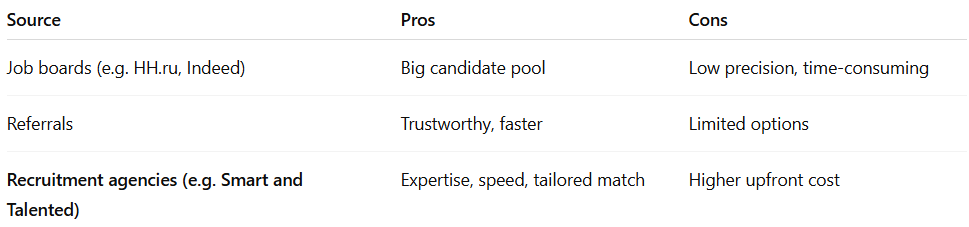
The key phrase here isn’t “I need a personal assistant” or “I need an executive assistant”, but “I need to protect my time.” That's where the return on investment becomes clear.
Final Thoughts
Hiring an executive assistant is not an expense — it’s a strategic move. It enables you to scale without burning out. When you delegate intentionally, you don’t just buy back time — you buy back clarity, focus, and energy.
If you're stuck doing everything yourself, ask:
- What tasks drain me weekly?
- What am I not doing because I’m too busy?
- What’s the cost of continuing like this?
And if the answer keeps circling back to “I need help,” it’s probably time to act.